
We started Augmented Healthcare intending to build tools for practising clinicians. Our first product ended up being a training platform.
That wasn’t the original plan. We wanted CoCo, our Consultation Contextualiser, to help clinicians understand what was happening in a consultation and spot things that might otherwise be missed.
The difficulty came when we looked at what it would take to put that technology into clinical use, and who could buy it.
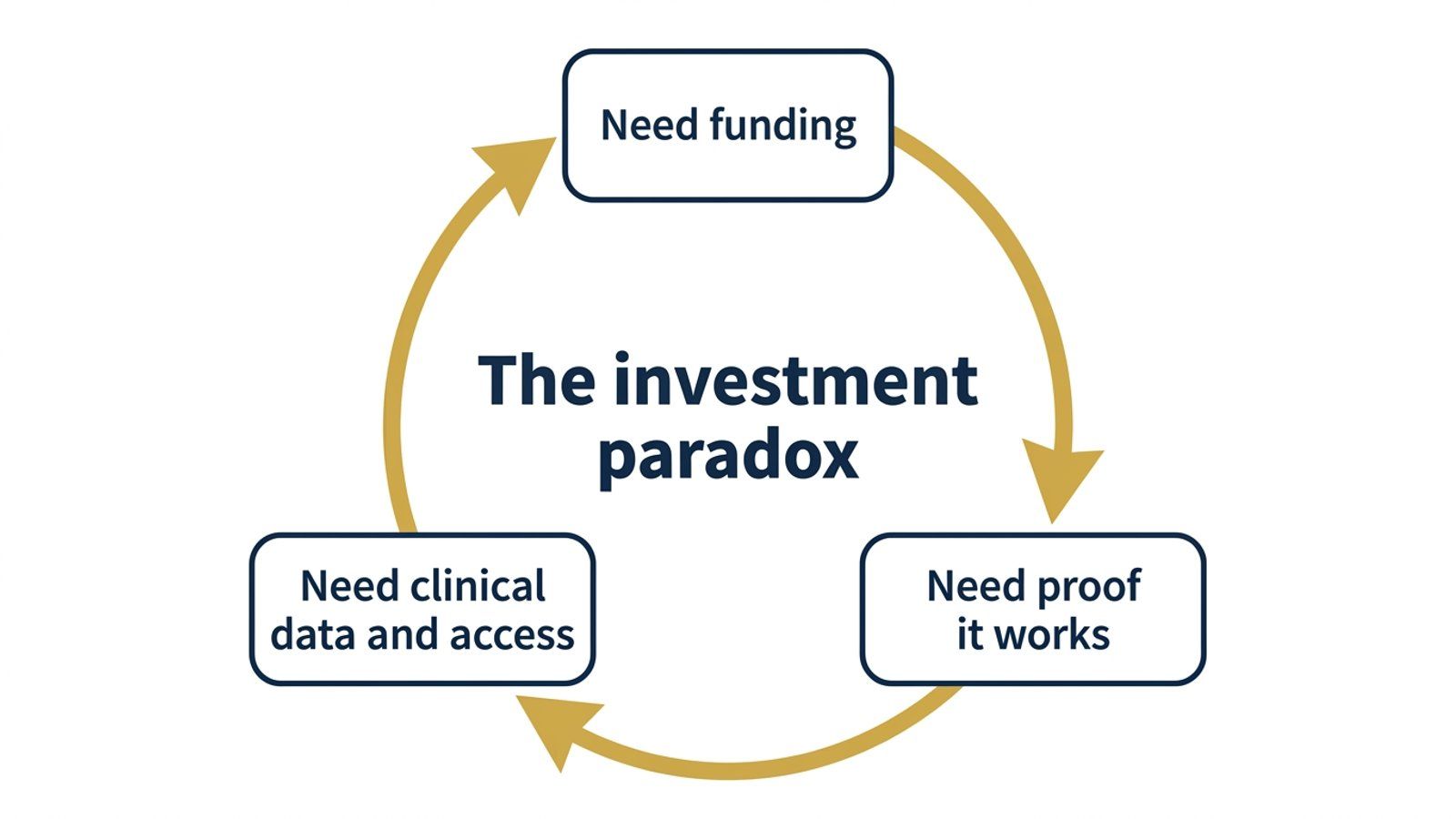
The investment paradox
The problem came down to three connected requirements:
- To raise funding, we needed evidence that the product worked and had a credible route to market.
- To build that evidence, we needed suitable consultation data and a way to evaluate performance.
- To arrange access, agree how data could be used and carry out validation, we needed time and money.
We needed funding to build the evidence that would help us secure funding.
We could have tried to raise enough to work through it. What worried us was how much of that investment might go into opening the route itself.
If we paid to establish the route, what advantage would we retain once other companies could follow it?
Our engineering, expertise and any data we were entitled to use could still have value. We weren’t assuming competitors could copy everything. But we were concerned that some of the hardest, most expensive groundwork would make their journey easier without giving us enough of a head start.
That changed how we thought about investment. Before asking someone to fund the journey, we needed a clearer answer to what their money would leave us owning.
Finding a customer who could act
Procurement added another difficulty. We encountered routes that asked for a trading history and organisational evidence we could not yet provide. A promising prototype was still a long way from something an NHS organisation could buy.
We also explored out-of-hours services. Reviewing recorded consultations seemed a more practical starting point than offering support during a live encounter. But in the conversations we had, existing contracts and agreed audit arrangements made the immediate opportunity less clear than we had expected.
There was a difference between someone recognising the problem and being in a position to pay for a solution.
Why we built
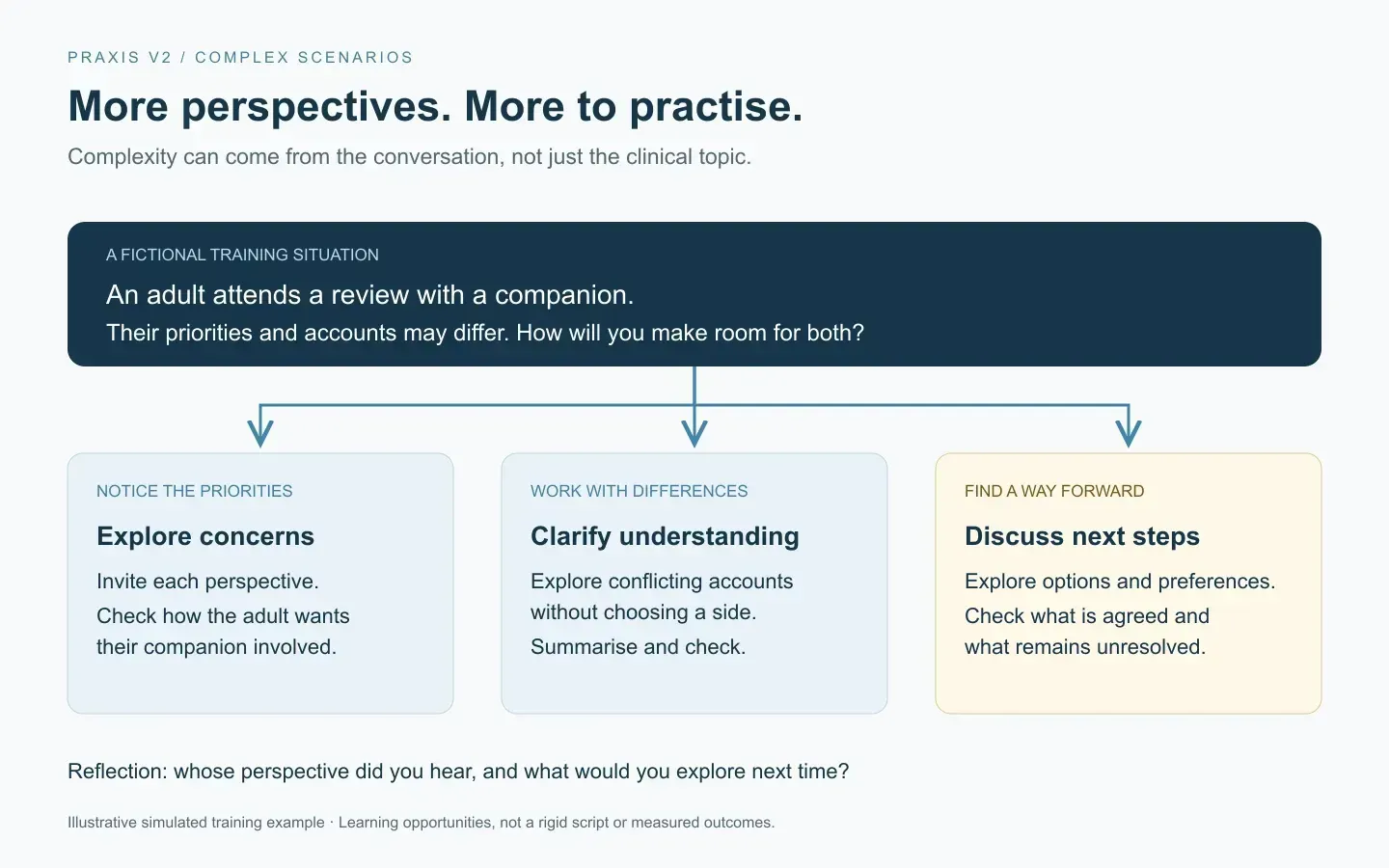
Education gave us a different starting point. Medical students and GP trainees need opportunities to practise consultations. We could offer simulated practice directly to individual learners, without making an institutional purchase the first step.
It wasn’t a small change. We now needed to simulate patients as well as analyse conversations. That work became , built around the consultation-understanding technology we had already been developing.
Working with fictional cases gave us room to:
- Examine how the technology handled a simulated consultation.
- Compare its feedback with clinical judgement.
- Look closely at where it fell short.
That is useful evaluation work; it does not, by itself, prove readiness for real patient care.
Learners get another place to practise and reflect between teaching sessions, using credits for consultations and feedback. Whether that improves examination outcomes is something to evaluate, rather than promise.
Then medical schools began expressing interest. We had explored a direct-to-consumer route partly to reduce our dependence on institutional procurement, and it was opening institutional conversations again, this time around a different use.
We still want to improve healthcare by improving consultations. changed where we started. It gave us a product people could try, a clearer learning task to work on and a reason to keep building.
That was a better use of our next year than insisting the original route had to be the right one.