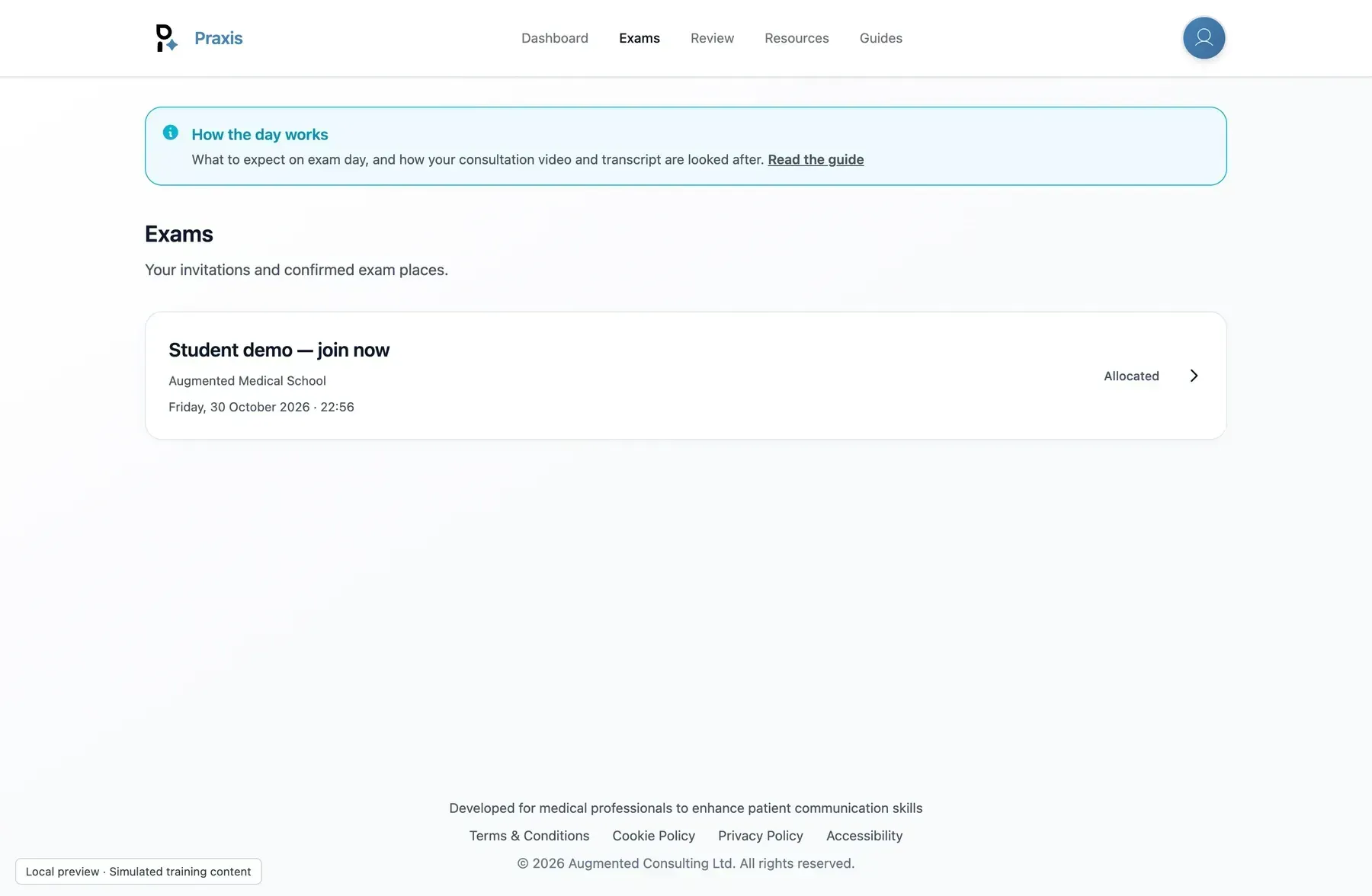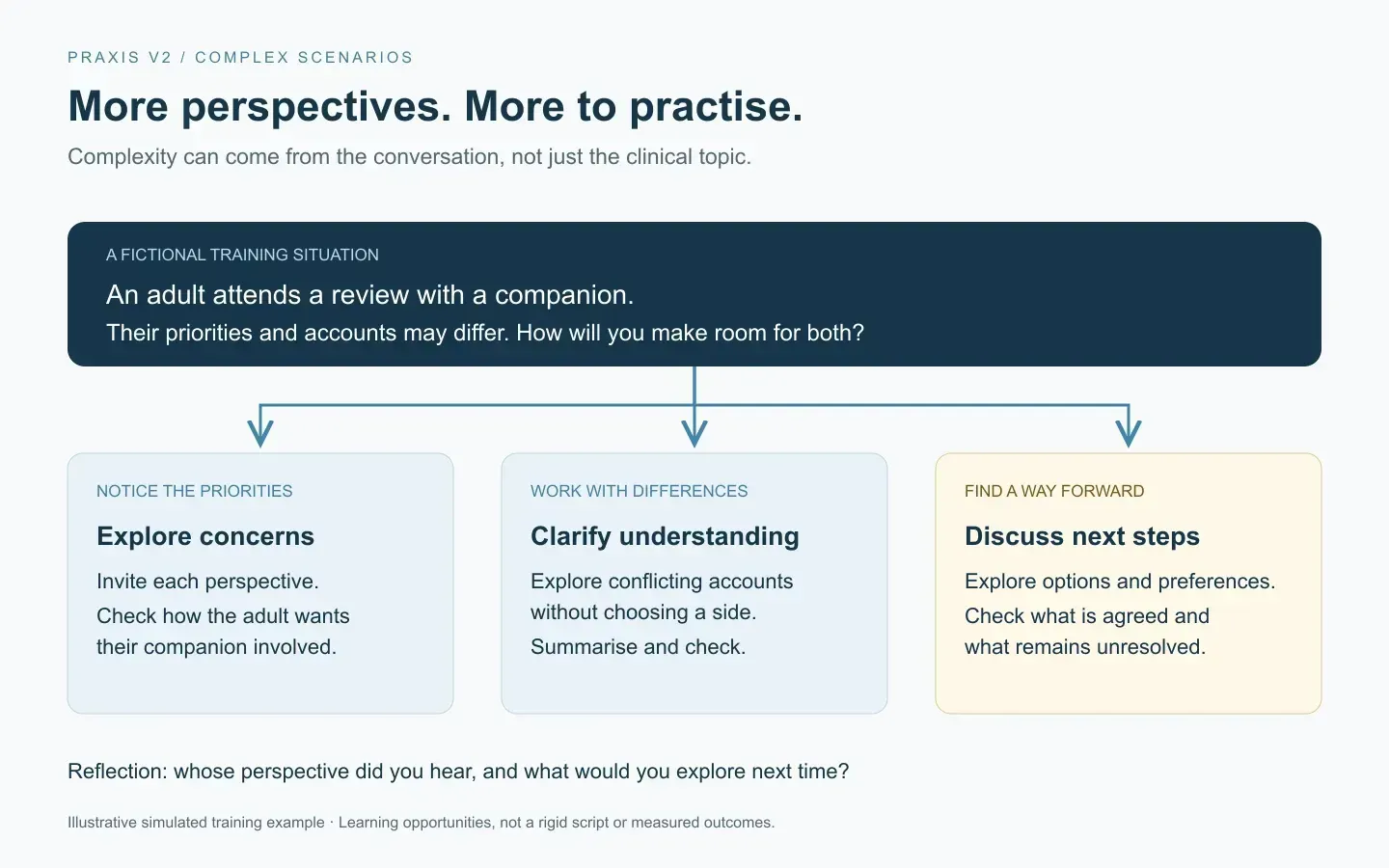

Sometimes a practice consultation leaves you with a question you can name. How could I have explored that concern? What could I say when someone disagrees? How do I check understanding without making it feel like a test?
Our upcoming educational platform is being built around those questions, with communication-skills teaching you can use alongside simulated practice.
Coming soon. The screenshots show local previews, not a confirmed launch date or final access offer. We’ll confirm availability and access arrangements separately.
Three starting points
The teaching is organised into three collections:
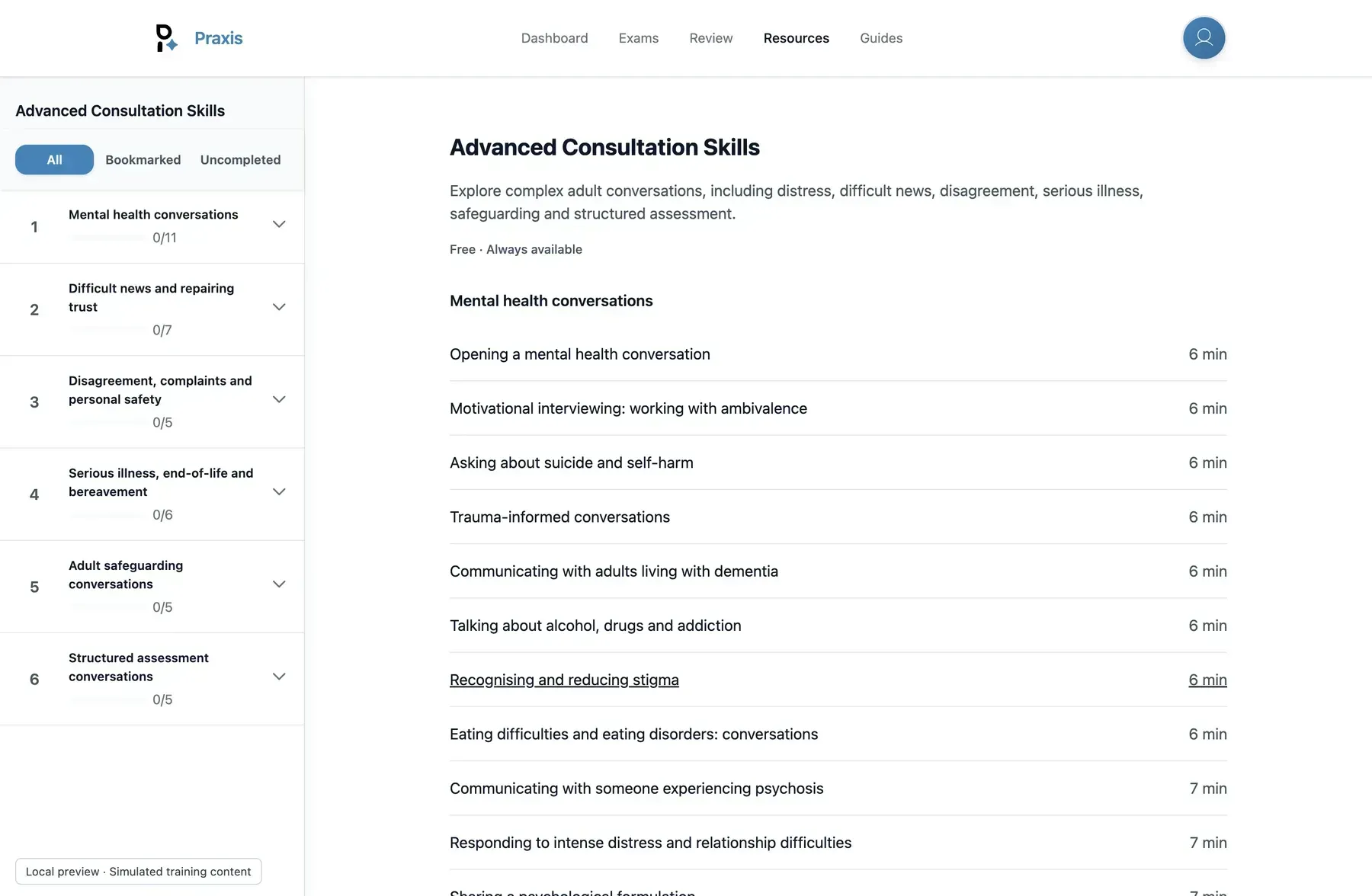
- Consultation Foundations: opening a conversation, exploring concerns, explaining information and working towards shared plans.
- Advanced Consultation Skills: more demanding conversations, including distress, difficult news, disagreement and serious illness.
- SCA Preparation: bringing consultation skills together in a simulated assessment context.
The SCA collection is independent teaching. It is not an official examination resource, a complete curriculum or a promise of examination success.
From an idea to something you can try
A resource should help you understand why an approach may be useful, show how it could sound and explore where it can become difficult.
Take the preview resource on declining treatment or investigation. Its focus is to help learners consider how to:
- Clarify what the person is declining.
- Explore their reasons without assuming they have misunderstood.
- Explain relevant options without coercion.
- Discuss how care can continue when a recommendation is declined.
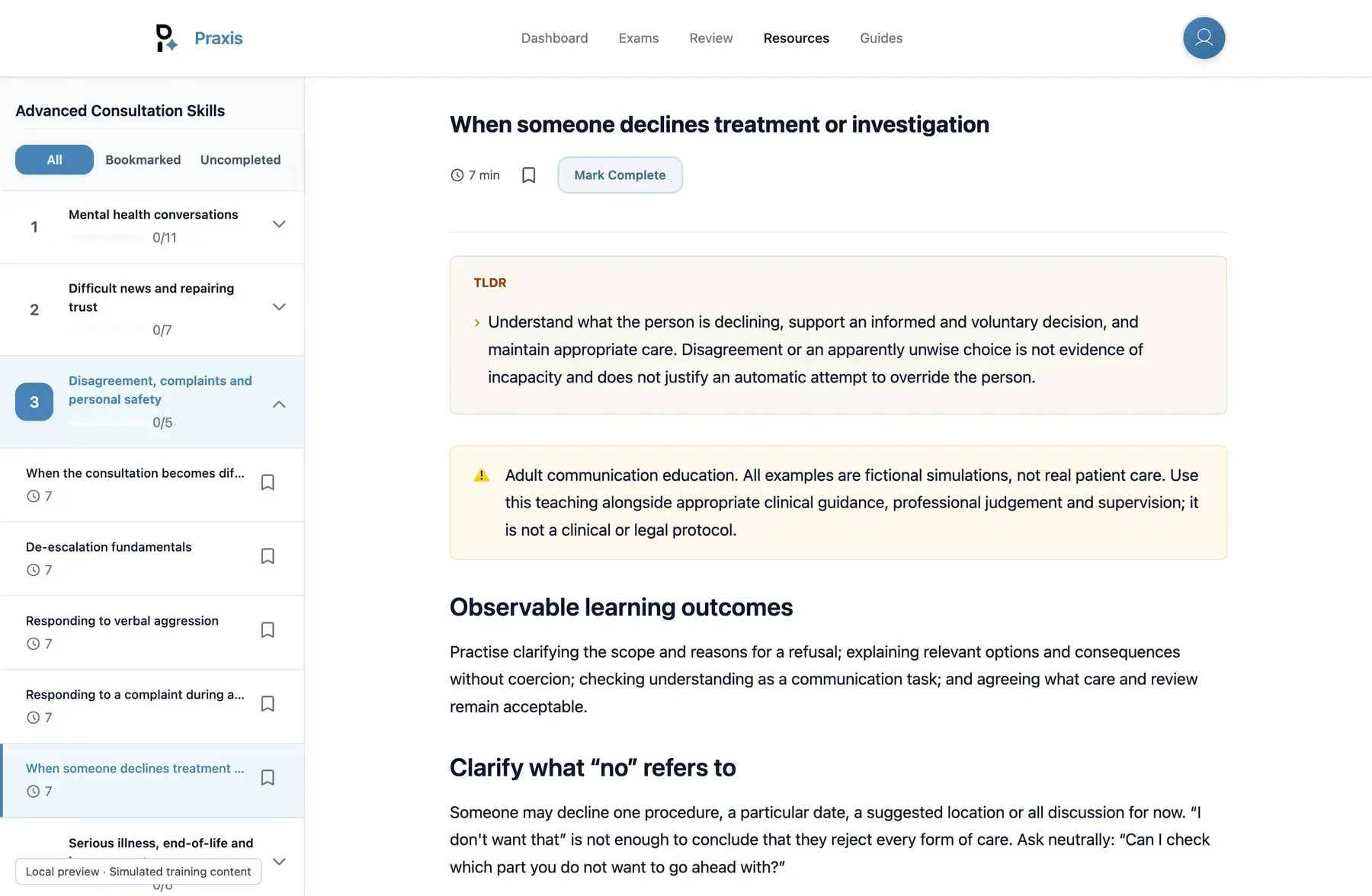
The worked examples are fictional. They are there to examine, not repeat word for word. Clinical and legal questions still need the relevant guidance, professional judgement and supervision.
Bring a question back to practice
You don’t need to follow one rigid route through the material. You might read before choosing a scenario, or look something up after a session has raised a question.
One way to connect the two is:
- Choose a specific issue from your practice, such as responding to disagreement.
- Read the teaching and pick one approach you want to explore.
- Try it in a fictional scenario, then reflect on what happened.
That is a suggested way to study, not a claim that the platform automatically personalises your learning or that completing a resource proves competence.
We’ll share the final scope and access arrangements when the educational platform is ready. For now, the aim is to give learners somewhere useful to turn when practice leaves them wanting a better explanation.