
An exam day starts before the first consultation. Learners need to know where to join, actors need their arrangements and organisers need to coordinate the people involved.
We’re actively trialling organised exams in : timed OSCE consultations with actors playing fictional patients over live video. They are separate from individual practice with an AI-simulated patient.
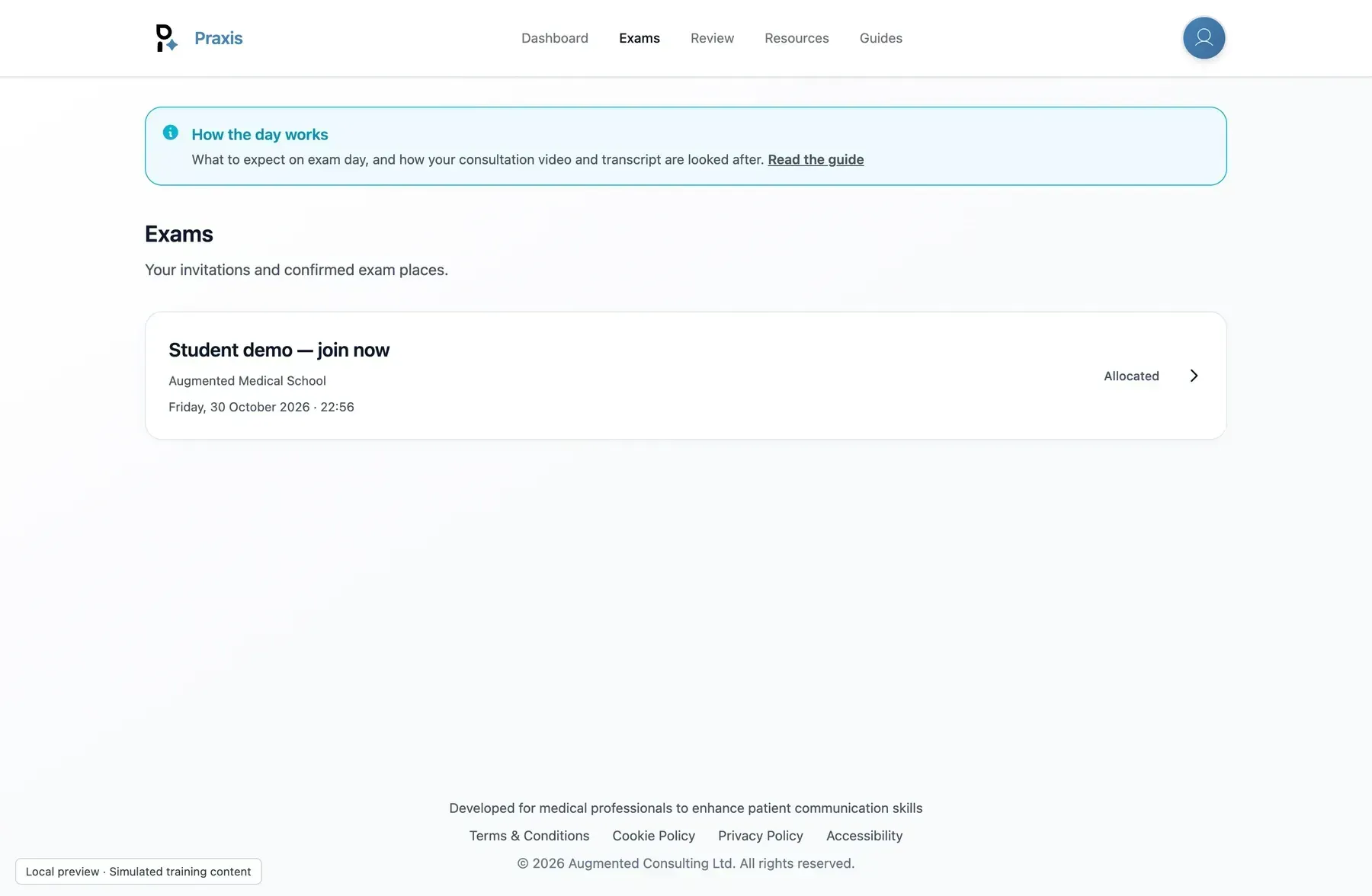
Organised exams are actively in trial and are not generally available. This article is not an invitation to an exam. The screenshot shows a local demonstration allocation; its organisation and date are illustrative.
Know where to go before the day
The learner-facing Exams page brings invitations and confirmed places together. In the preview, a learner can see an allocated exam, its date and organisation, and a route to further information.
There is also a guide to the day and how recordings and transcripts are handled. Viewing an invitation is distinct from accepting it: learners need to be able to see what they are agreeing to.
From preparation to a timed station
The preparation journey has three parts:
- Review the exam information: check your place, schedule and joining instructions.
- Prepare your devices: check the microphone, camera and audio.
- Follow the lobby instructions: join when the exam is available and use the controls provided.
The organiser manages the roster, schedule and participation arrangements. During a station, the learner speaks over live video with an actor playing a fictional patient. Timing and joining controls follow the exam’s state and the learner’s participation.
The trials let us work through that shared experience before opening it more widely, including what happens before anyone starts speaking.
What happens after a station
Review and assessment depend on the organiser’s arrangements. Learners need clear information about:
- How marking and feedback will be provided.
- Who can access recordings and transcripts.
- When material is ready to review, as processing can take time.
A preview of the platform is not a promise of an automatically issued grade, a particular result format or access to every recording. The organiser sets out the arrangements for each exam.
A different way to practise
Individual simulated-patient practice gives you room to choose a skill and repeat a conversation. An organised exam places the consultation in a scheduled, timed setting involving other people.
We want both experiences to have clear instructions and sensible preparation. We’ll share more about participation and general availability as the trials progress.