
We’ve been rebuilding both the consultations in and the platform around them. There’s a clearer way to find practice, a new simulation engine and more scope for conversations involving different people and priorities.
We’re also preparing our educational platform and actively trialling organised exams. Here’s how those pieces fit together.
Easier to find and organise your practice
If you have twenty minutes to practise, you don’t want to spend the first ten working out where to go. Our platform work focuses on a few everyday improvements:
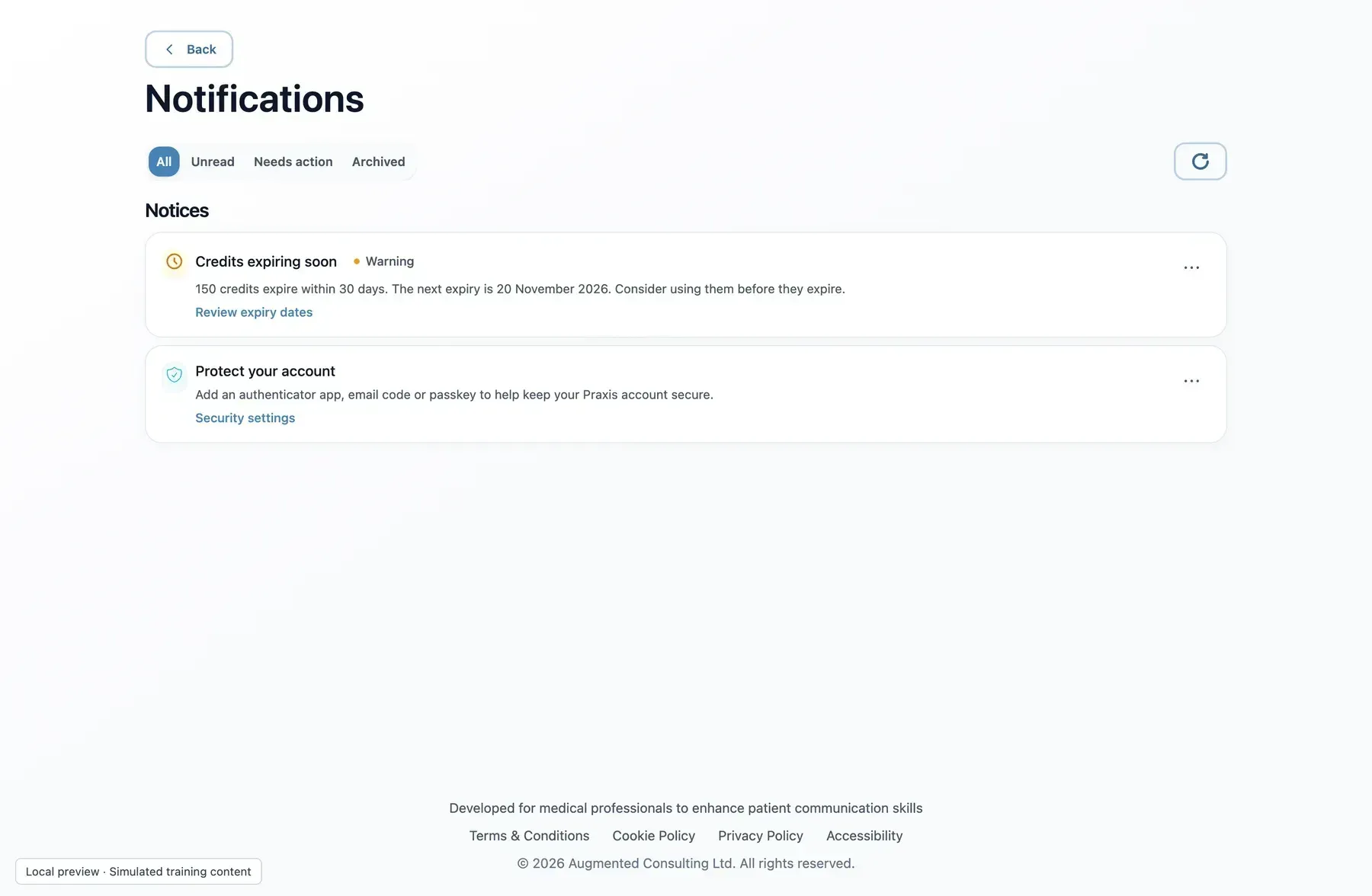
- Notification Centre brings notices and updates into one place, with separate views for unread items and things that need a response.
- Clearer catalogues help you browse scenarios by setting, category and difficulty, rather than scrolling through everything.
- Work on responsiveness aims to reduce avoidable delays during spoken consultations. Your connection, device and session still affect the experience.
More depth in simulated consultations
The new simulation engine supports more than one simulated participant, behaviour that develops through a conversation and information that becomes relevant as you explore it.
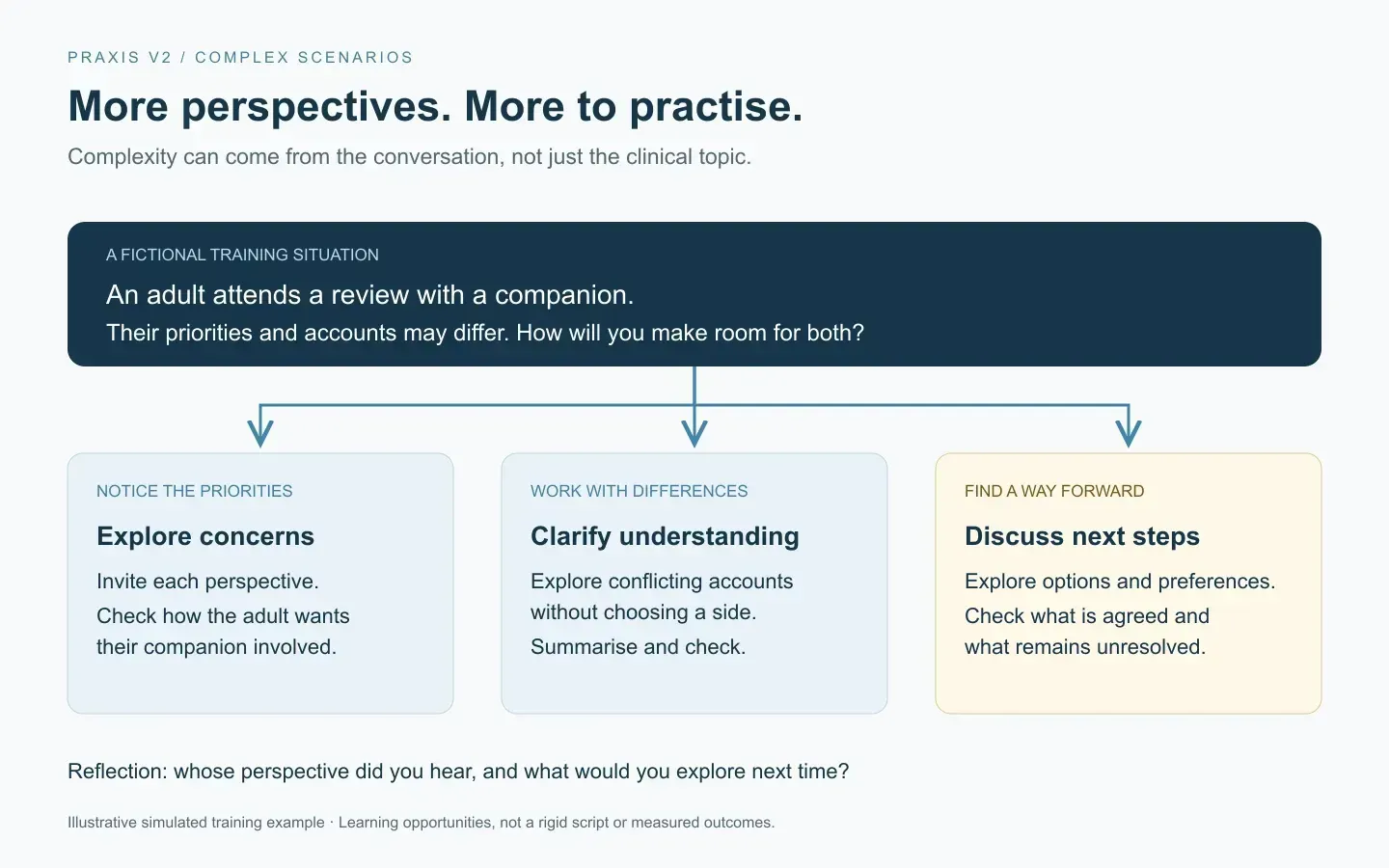
Imagine a fictional patient attending with a companion. The companion is worried about one thing; the patient wants to talk about something else. You need to find out how the patient wants the other person involved, give both accounts space and work out what matters most.
That gives you several things to practise:
- Inviting a concern that has not yet been voiced.
- Checking your interpretation when two accounts differ.
- Discussing a next step without assuming everyone agrees.
Not every session needs that complexity. Focused scenarios remain useful when you want to work on one part of a consultation. The aim is more choice in the learning task, not longer or harder conversations for their own sake.
Our educational platform: coming soon
Practice often leaves you with a question: how could I have explored that concern, explained the options or handled a disagreement differently? Our upcoming educational platform gives you somewhere to work through those questions.
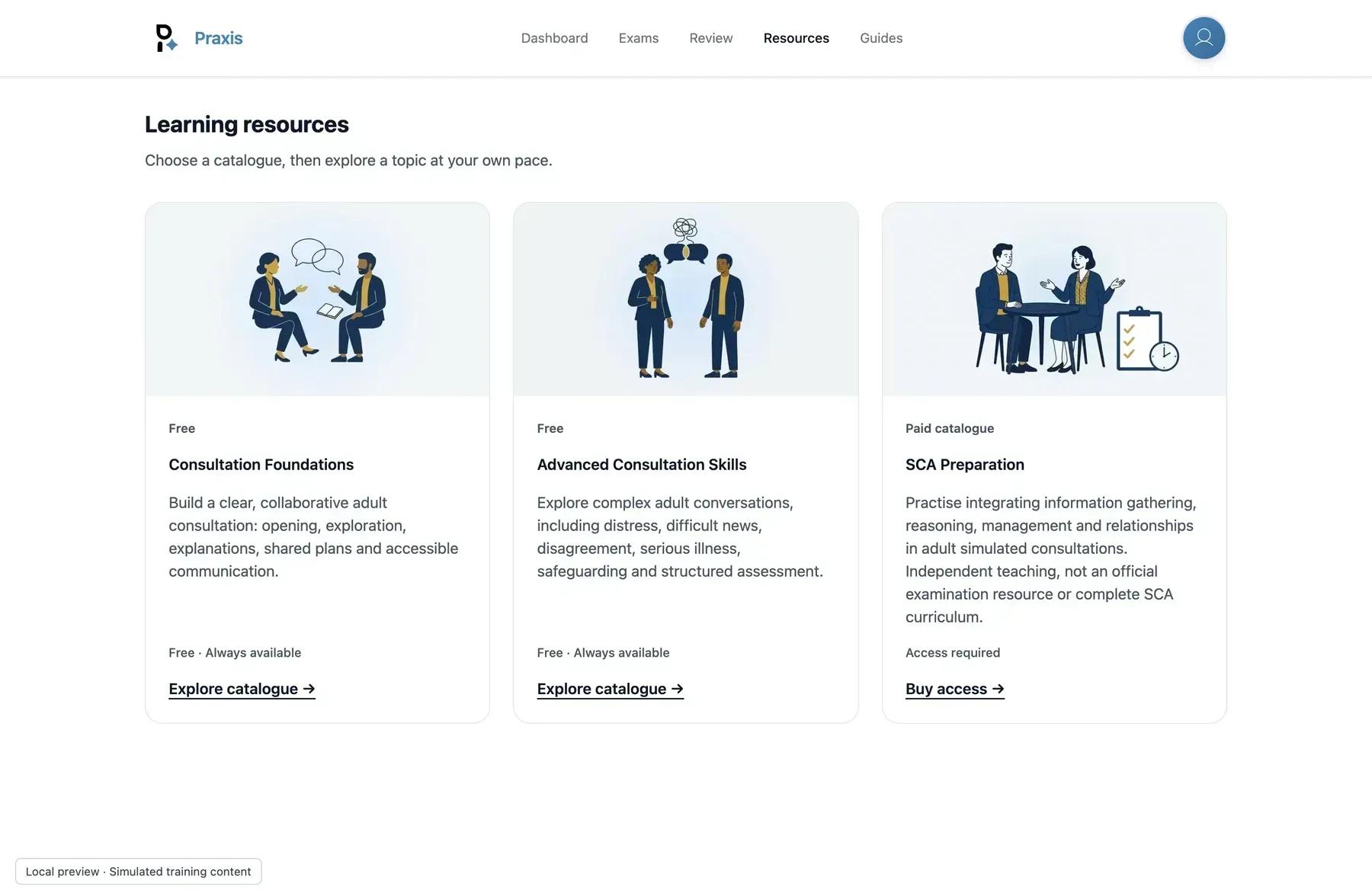
The teaching is being organised into three collections:
- Consultation Foundations: opening the conversation, exploring concerns, explaining information and working towards shared plans.
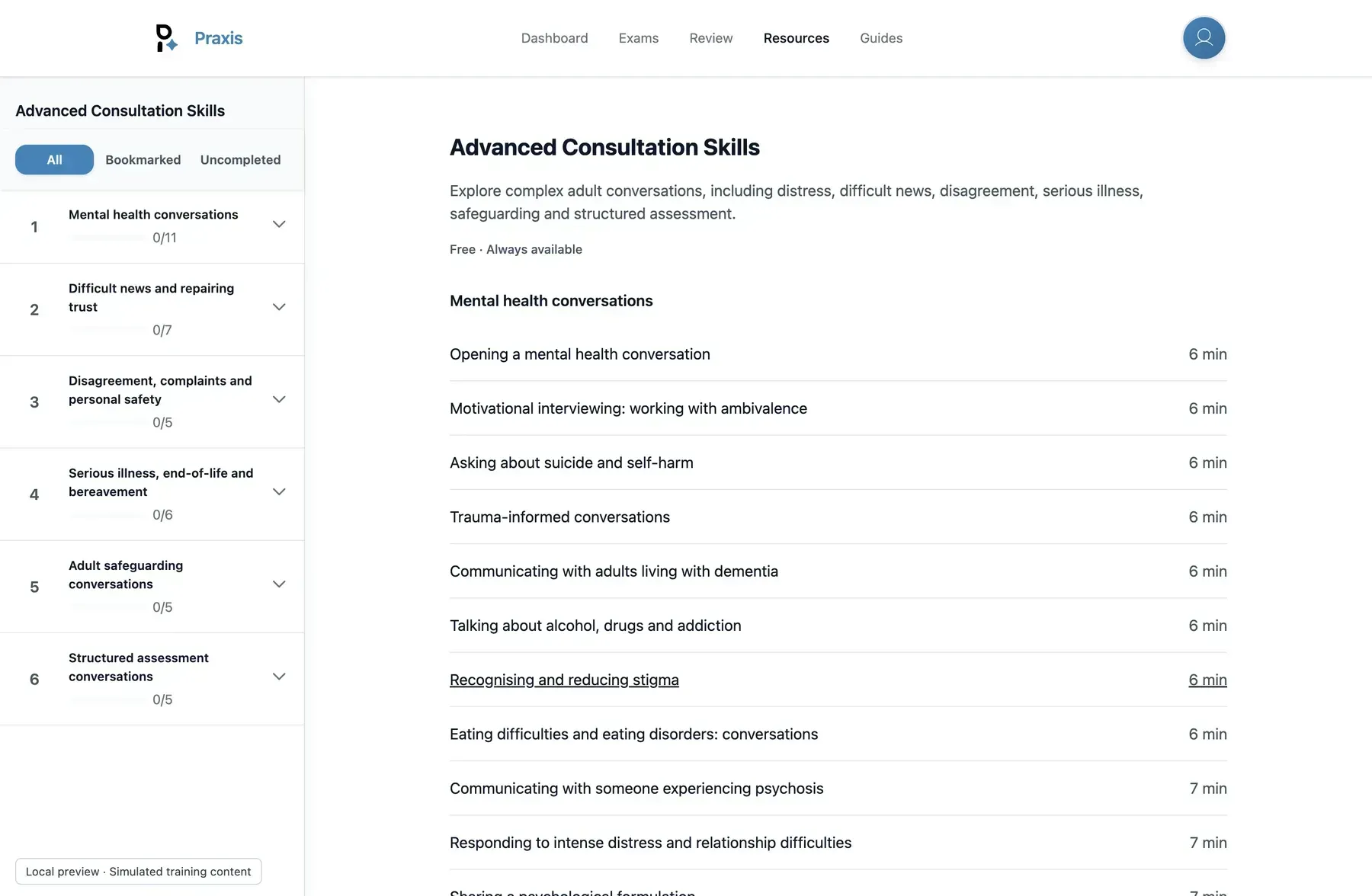
- Advanced Consultation Skills: more demanding conversations, including distress, difficult news and disagreement.
- SCA Preparation: bringing consultation skills together in a simulated assessment context.
Resources will combine explanations, fictional examples and reflection prompts. You could read about a skill before practising it, or return to the teaching after a session has raised a question. The SCA material is independent teaching, not an official examination resource or a promise of exam success.
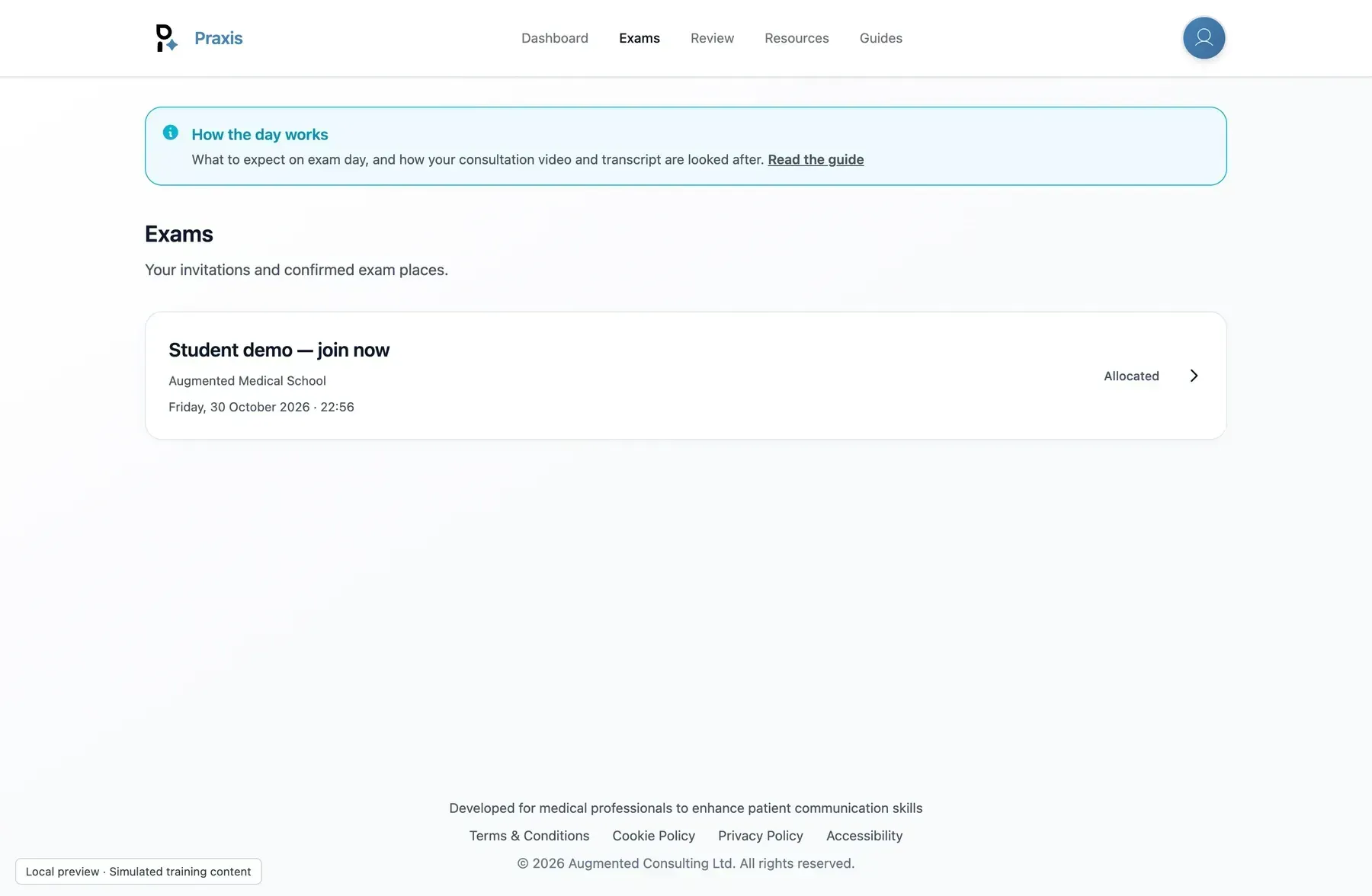
Organised exams: now in trial
We’re actively trialling organised exams in , with timed consultations involving actors playing fictional patients over live video.
This is a different experience from practising alone with an AI-simulated patient. It brings learners, actors and organisers together around a scheduled exam. The work covers:
- Invitations and clear information about your place and schedule.
- Device checks and joining instructions before a station begins.
- Timed video consultations, with review and assessment arrangements set by the organiser.
The trials give us a chance to test that shared experience before opening it more widely. They are not an announcement of general availability.
The educational platform is coming soon. Organised exams are actively in trial and are not generally available. We’ll confirm access arrangements separately. Screenshots show local previews with demonstration content; access labels, credit quantities and dates are illustrative.
We’ll share more detail about the simulation engine, teaching and exams in separate updates. For now, this is the direction of V2: easier preparation, more varied practice and teaching you can return to when a conversation gives you something to work on.